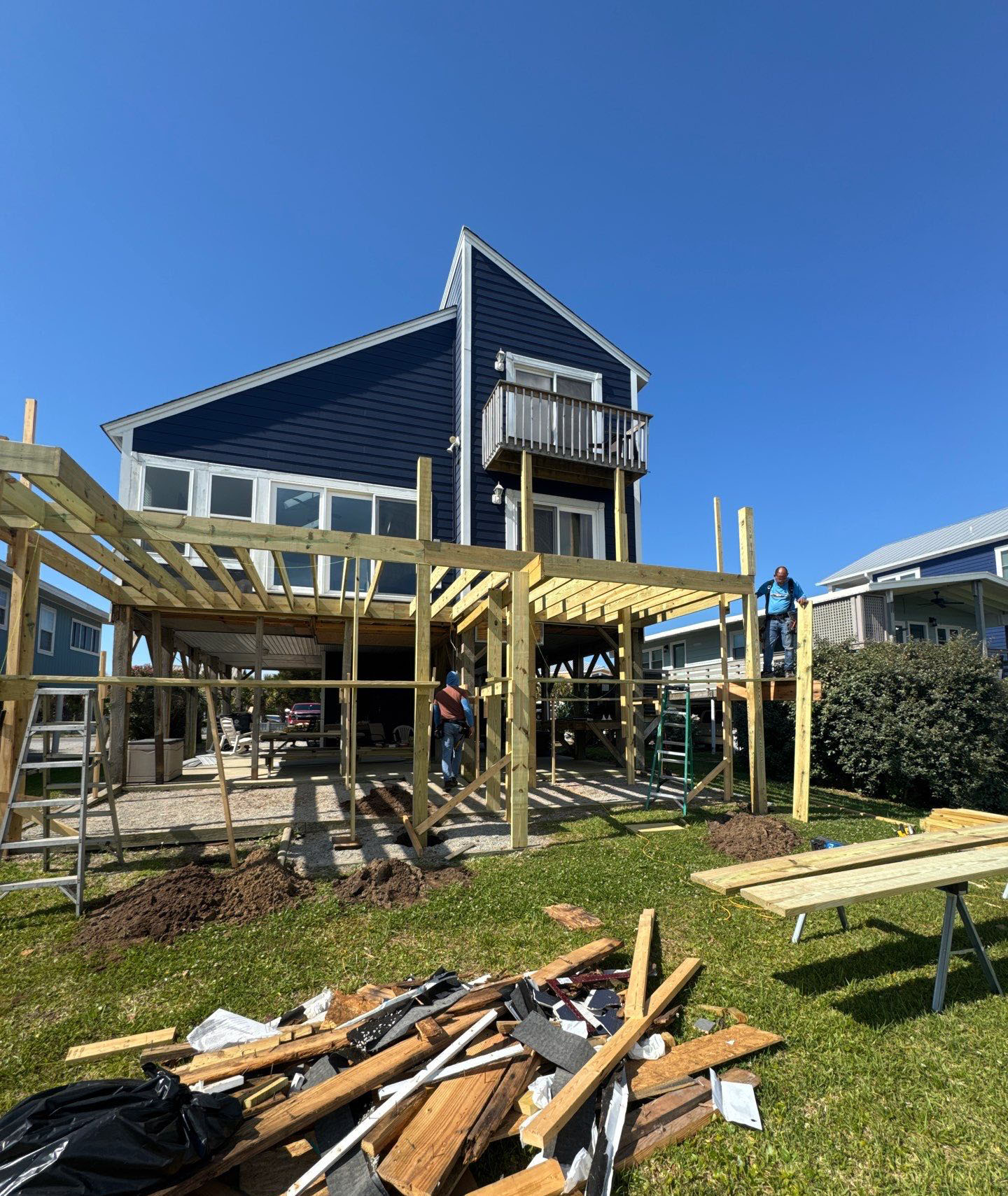
A fresh deck surface can make an outdoor space feel ready for another season. Before choosing the boards, though, a Southport property owner has another decision to make: what should happen to the connections underneath them?
Metal hangers, brackets, bolts, screws, and nails are easy to overlook when planning a visible improvement. For a coastal home or rental property, their condition and suitability deserve a specific place in the resurfacing conversation. Here is how to discuss that work with your contractor without trying to diagnose the structure yourself.
Why Coastal Exposure Matters Below the Boards
Coastal exposure involves more than the rain that lands on the walking surface. Simpson Strong-Tie identifies salt air, time spent wet, condensation, wood-treatment chemicals, and contact between different metals as factors in corrosion. Its material-selection guidance evaluates those conditions before recommending a connector material or coating.
For an owner in Southport or Oak Island, the useful question is how the proposed hardware fits the actual exposure at the property. Ask your contractor to explain the selection for the location and lumber involved. A description such as “exterior hardware” leaves important details unanswered.
Rust Is a Reason to Investigate, Not a Complete Diagnosis
A photograph of a rusty connector cannot establish how much strength remains. Simpson Strong-Tie explains that some visible corrosion does not necessarily mean capacity has been affected, while substantial or suspected corrosion warrants evaluation of the wood and connecting components by a qualified engineer or inspector. Its general corrosion guidance also notes that corrosion can reduce a connection’s carrying capacity.
Tell the contractor what you have observed and where. Include earlier repair records if available. Do not remove fasteners, pry at brackets, or load a questionable deck to test it. If the deck, stairs, or rails appear unstable, keep people away while arranging a professional evaluation.
The Connector and Its Fasteners Must Work Together
A bracket is only one part of its connection. The fastener type, size, quantity, and installation must suit the particular connector. Corrosion compatibility matters as well. In its connector and fastener guidance, Simpson Strong-Tie explains that these parts must be selected as a compatible combination; an arbitrary screw is not an interchangeable substitute.
When reviewing a proposal, ask whether it identifies the replacement connector and the fasteners specified for it. The answer should refer to current product requirements and the project’s design. A homeowner should not have to select structural hardware from a store shelf to fill a gap in the construction scope.
Review the Wood and Water Details at the Same Time
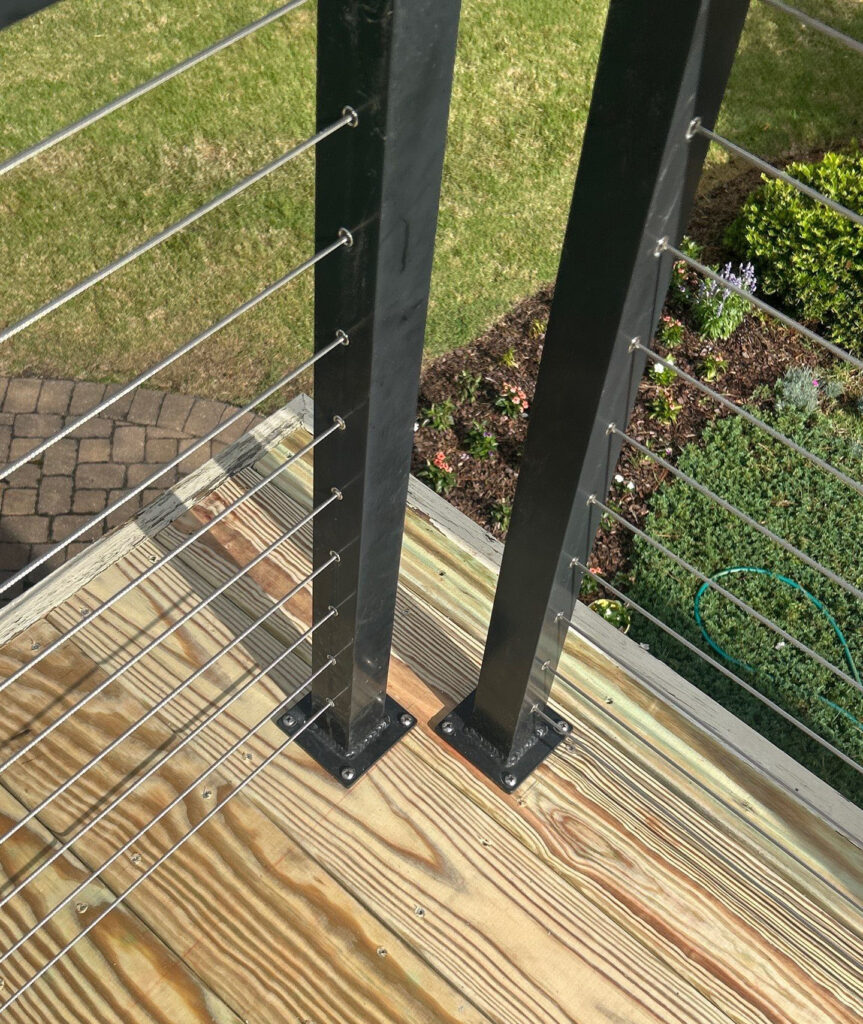
The review should address the surrounding wood and the water-management details, too. The North American Deck and Railing Association’s consumer guide highlights damp areas, wood near fasteners, and flashing where a deck meets the house. It also makes clear that an owner’s checklist does not establish code compliance.
Ask which connections can be examined before resurfacing and which will remain concealed until work begins. Have the contractor distinguish a visible observation from an assumption about an inaccessible area. That distinction helps everyone understand why the final repair decision may require an additional look after selected materials are removed.
Put the Investigation and Repair Decisions in Writing
“Replace the deck boards” tells you little about the connections that will remain. Before approving the work, ask for a brief description of the review, proposed repairs, and process for discoveries. Useful questions include:
- Which framing and connection components are expected to stay?
- Which hardware replacements are included in the price?
- What access or removal is needed to evaluate concealed areas?
- Who will review a condition that requires engineering input?
- How will additional findings, costs, and approvals be documented?
- Who will confirm applicable permit and inspection requirements?
Keep any photographs linked to a specific location: rear ledger connection, yard-side post base, or upper stair landing, for example. Those labels help an off-site owner understand what the contractor is discussing. Ask for a pause and an explanation before an unexpected condition is covered by new finishes.
Keep a Useful Record After the Work
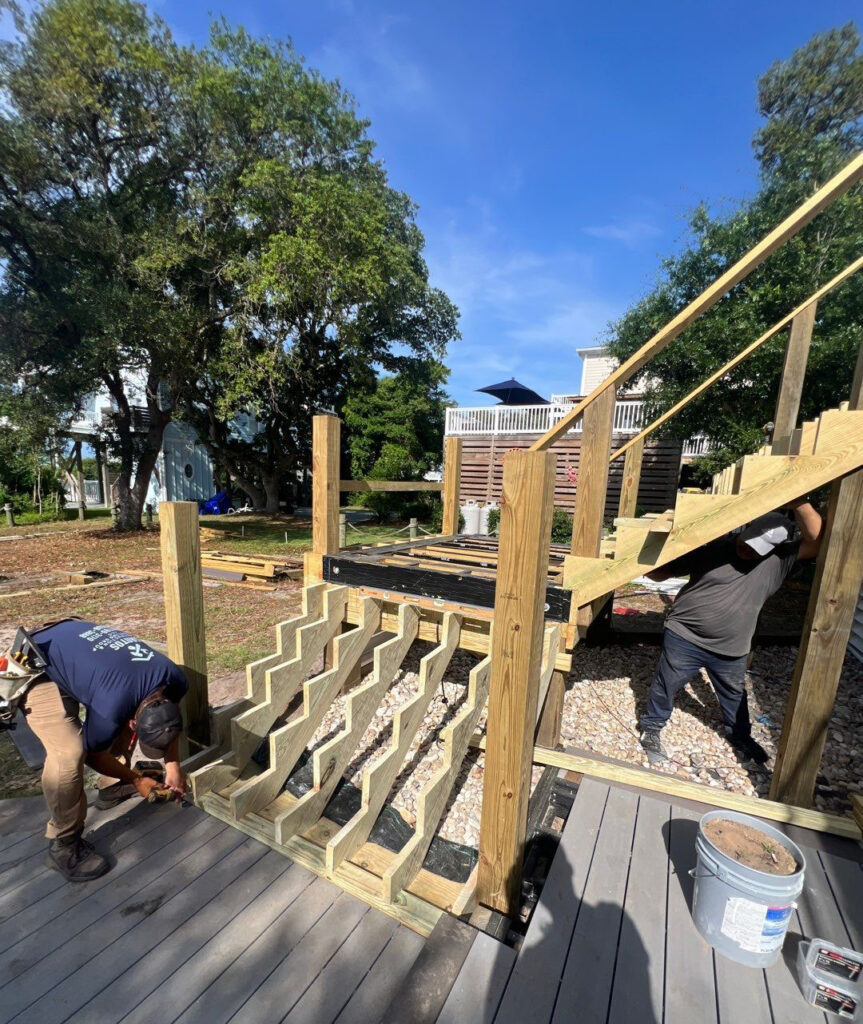
For a rental or managed property, request a small closeout file with the agreed scope, approved changes, product information, and photographs of completed connections where available. Keep it with the property’s construction records so the next manager does not have to reconstruct what was replaced.
Ask what future inspection and maintenance the completed work needs. Avoid assuming any hardware choice eliminates that responsibility: Simpson Strong-Tie’s corrosion guidance notes that even stainless steel can corrode and that service life cannot be predicted from a single general rule. Follow the project’s specific recommendations.
Plan the Resurfacing Around What the Evaluation Finds
The goal is a clear decision about the existing deck before the new surface becomes the focus. Once the connections, framing, and adjoining details have been reviewed, you can discuss which work belongs in the project and what further information is needed.
RGR’s Southport construction services include decks, porches, structural repairs, and related exterior work. If you are considering resurfacing or have concerns about an existing deck in Southport, Oak Island, or St. James, request a project review or call 910.604.6560. Share the property location, a description of the concern, and any available repair history to start the conversation.